Hiring a Builder or Contractor in Ontario
A consumer guide to hiring a new home builder, renovator, or other construction professional in Ontario.
The HCRA’s Guide to Help You Choose a Builder or Contractor in Ontario
Building a new home or buying a newly built home is one of the biggest purchases many people will ever make. There is a lot to consider when you choose a builder to work with. This guide outlines the key steps consumers should take when hiring construction professionals or purchasing a newly built home in Ontario.
Disclaimer: This guide is intended for general informational purposes only and does not constitute legal advice. Consumers should consult a qualified lawyer for advice specific to their circumstances. The information in this guide is current as of the date of publication and may be subject to change. Construct Legal prepared this content for the Home Construction Regulatory Authority (HCRA).
Background
- The Home Construction Regulatory Authority (HCRA) licenses and regulates all new home builders and sellers in Ontario. HCRA is responsible for compliance and consumer protection.
- Tarion administers Ontario’s new home warranty program, including enrolment for applicable homes and warranty coverage.
- New home builders and sellers must be licensed by HCRA and enroll the home with Tarion. You can check the Ontario Builder Directory (www.obd.hcraontario.ca) to see a builder or seller’s disclosable regulatory history for the last 10 years. You can also ensure a specific address has been registered for a warranty through Tarion in the Directory.
- Renovators or general contractors are not regulated by the HCRA. Certain tradespeople, like plumbers and electricians, need to be certified through Skilled Trades Ontario (www.skilledtradesontario.ca/public-register), though there are also many unregulated trades. Consumers should confirm which rules apply to their specific situation.
- Some licensed builders may also do renovations. In this case, it can be helpful to still look at their history in the Ontario Builder Directory.
- Voluntary programs do exist, such as RenoMark (www.renomark.ca), which provides a directory of renovators who agree to abide by a certain code of conduct, provide insurance, etc. to provide consumers with a certain level of assurance.
Understand What You’re Hiring For
Construction professionals often use terms like “contractor”, “construction manager”, “project manager”, or “developer”. People and companies may use these terms interchangeably or differently in their contracts. Consumers should look beyond titles and consider the nature of the relationship and services offered.
There are not standard definitions for these terms, however the HCRA does provide definitions for “Builder”, “Vendor” (also known as Seller), “Home”, and “Owner”. These terms are specifically in relation to the New Home Construction Licensing Act, 2017 (NHCLA) and whether someone is legally required to be licensed as a Builder or Seller.
Before you sign, ask the person or company to define these terms in the contract.

Determine everyone’s roles
Ask these questions when you are hiring a builder or contractor:
- Are you buying a completed new home, a pre-construction home, or hiring someone to build or renovate on property you already own?
- Who will hold title to the land during construction?
- Who is responsible for obtaining building permits, inspections, paying tradespeople, etc?
Answering these questions is the first step, then checking the HCRA advisories and definitions, and ensuring the contract answers these questions. Seek legal advice if you’re unsure about the role you are taking on the project.
Buying a newly built home?
- Are you buying the home before it has been built? Or will you have ownership once it is substantially complete? Ensure timelines are clear and outlined.
- In a pre-construction purchase where you do not see the final product, make sure the contract outlines any expectations of the final product (ie. If they’ve verbally agreed to installing marble countertops, ensure they put it in writing).
- Make sure the contract considers risks such as deposit protection, insurance, warranties, and delayed closing or occupancy.
In any case, be cautious if a construction professional tries to make the consumer act as the project manager or builder without clearly explaining the legal and practical responsibilities involved. In some circumstances, this may indicate an attempt to avoid licensing requirements that would otherwise apply.
Hiring for renovations?
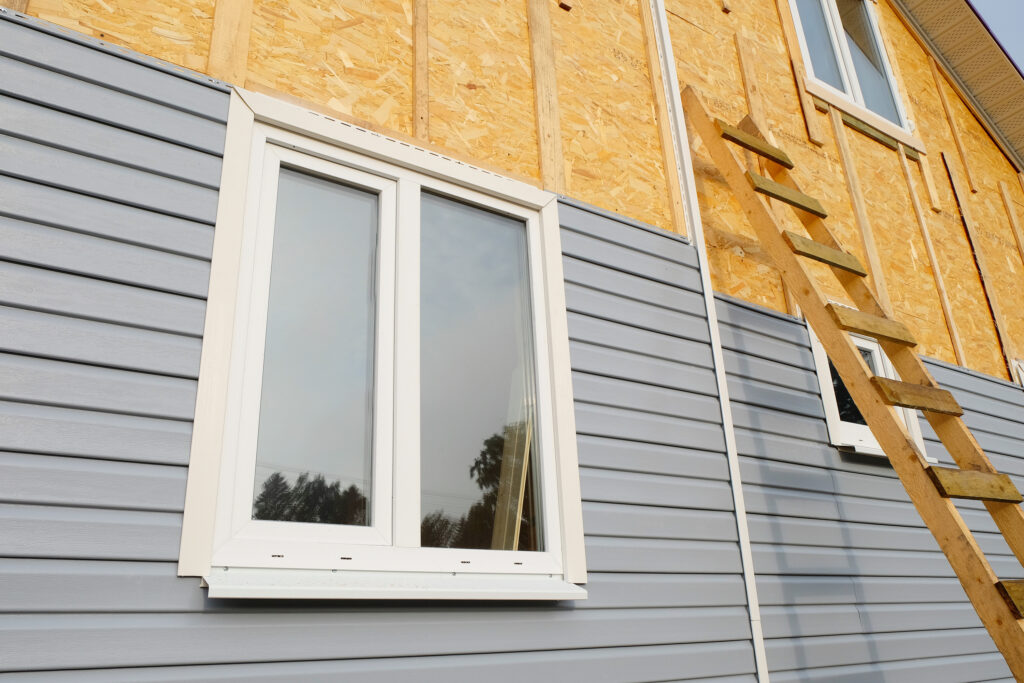
For renovation projects, make sure you understand the scope of work, whether it involves structural changes or additions, and who is responsible for design, permits, trades, and inspections. Depending on the project, legal and regulatory requirements such as permits, zoning, health and safety obligations, and contract terms may also apply.
💡 Key Takeaways
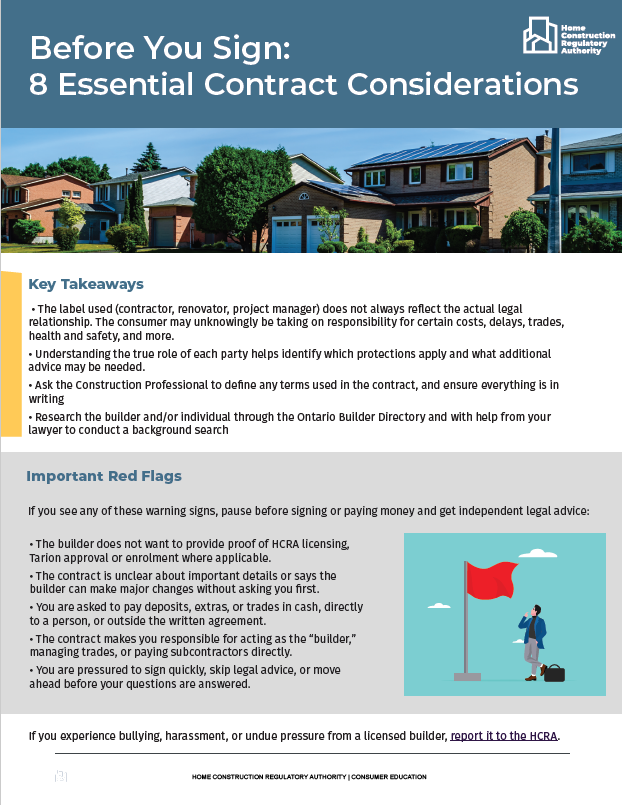
• The label used (contractor, renovator, project manager) does not always reflect the actual legal relationship. The consumer may unknowingly be taking on responsibility for certain costs, delays, trades, health and safety, and more.
• Understanding the true role of each party helps identify which protections apply and what additional advice may be needed. • Ask the Construction Professional to define any terms used in the contract, and ensure everything is in writingResearch Who You Are Hiring
Step 1: Check licensing and regulatory history
Before hiring a builder or contractor in Ontario, take the time to investigate the company you plan to work with. You can start with the HCRA’s free and public resource, The Ontario Builder Directory. If you’re hiring a builder, the Directory provides information about their license status and other history.
A licensed builder or seller is subject to HCRA requirements and oversight. Builders must prove core competencies in building and business knowledge. Where HCRA licensing is required, working with an unlicensed builder (even by accident) creates additional risks related to your home warranty (unlicensed builders won’t be registered with Tarion) and how the law can protect you.
How to research a builder 🔍
• Visit the Ontario Builder Directory at obd.hcraontario.ca
• Search by the builder’s company name, a director’s name within the company, the licence number, or their head office location • Review the builder’s licence status, conditions, and history before signing anything • A person or company could have multiple licenses. Do a thorough check.If you have questions about the builder’s history, call the HCRA for clarification.
Step 2: Learn About the Company
Look at the Directory, their website, and other websites for:
- Years active
- Number of homes built
- Past projects
- Ask the company for professional references
Consider researching the principals, officers, and directors of the business, which you can find in the builder’s profile in the Builder Directory.
Ask your lawyer about a litigation search. They may be able to find significant disputes, insolvency concerns, background searches or other relevant issues as appropriate. A dispute history does not automatically mean you should not work with a builder, but it may be one factor to discuss with your lawyer before signing.
Checking licensing and background information before you sign can reduce the risk of bankruptcy, abandonment, and defective work. Doing this research early may prevent costly disputes and give you a clearer picture of who you are trusting to build your home.
Review the Contract
Before signing, make sure you understand the type of agreement you are entering into and what obligations it creates for each party. For example, an Agreement of Purchase and Sale (APS) for buying a new home versus another construction agreement.
Get Independent Legal Advice
This guide can help you identify topics to ask about, but it does not replace legal advice. Ask your lawyer to explain how the contract deals with expectations, timelines, payment obligations, changes, warranties, and any other issues specific to your project.

- Have a real estate lawyer review any agreement of purchase and sale before signing.
- If signing a construction contract, engage a lawyer with experience in construction law.
- Do not rely solely on the builder’s agent or your real estate agent.
- A careful review before signing is much easier and less expensive than trying to fix problems after a dispute arises.
Key Contract Areas to Review
- Dates: Interim milestones, occupancy, completion, and closing timelines
- Deposits: Amounts, timing, and how deposits are held or protected
- Scope: The specific work that the contract covers
- Insurance: What insurance is in place during construction and who is responsible for it
- Changes and extras: Who will be responsible for changes in scope or cost
- Warranties: What warranties apply (Tarion, contractual, or both)
- Termination: Under what conditions either party can end the agreement
- Construction-related legal requirements: Ask your lawyer whether laws such as the Construction Act may affect payments, holdbacks, liens, timelines, or dispute processes for your project.
🚩 Important Red Flags
If you see any of these warning signs, pause before signing or paying money and get independent legal advice:
• The builder does not want to provide proof of HCRA licensing, Tarion approval or enrolment where applicable. • The contract is unclear about important details or says the builder can make major changes without asking you first. • You are asked to pay deposits, extras, or trades in cash, directly to a person, or outside the written agreement. • The contract makes you responsible for acting as the “builder,” managing trades, or paying subcontractors directly. • You are pressured to sign quickly, skip legal advice, or move ahead before your questions are answered.File a complaint with the HCRA if you experience bullying, harassment, or undue pressure from a licensed builder.
Before You Sign Checklist
- Check the Ontario Builder Directory
- Confirm who is responsible for permits and trades
- Ensure all promises are in writing
- Review the contract with a lawyer
Before You Sign: 8 Essential Contract Considerations